

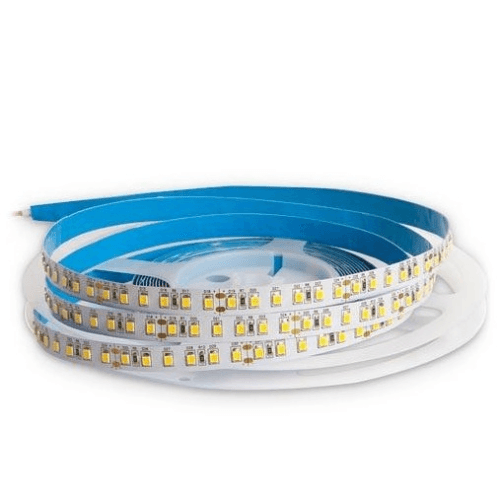
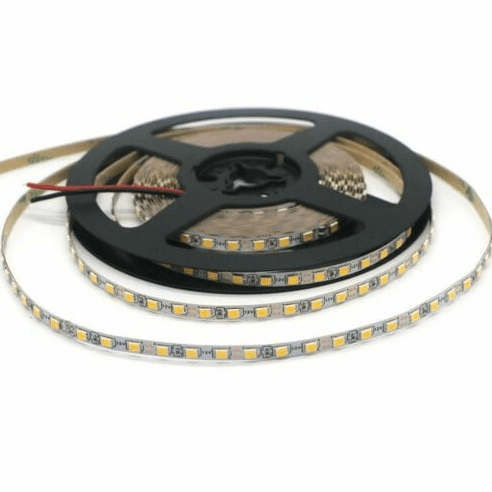
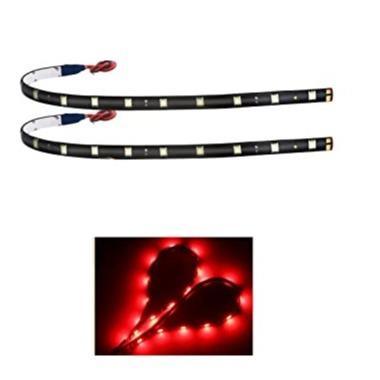

For more LED installation help, see our full FAQ guide here.
Does a strip light use more electricity ?
LED strip lights are one of the most energy-efficient lighting options available in South Africa.
A typical LED strip draws between 4.8W and 14.4W per metre, compared to 60W for a traditional incandescent bulb producing similar light output. This makes them ideal for South African homes and businesses looking to reduce Eskom electricity costs.
Running a 5-metre LED strip at 14.4W per metre for 8 hours a day uses roughly 0.58 kWh — a fraction of conventional lighting. With load-shedding adding pressure on backup power, LED strips are also a smart choice for use with inverters and solar systems due to their low draw.
Great for inverter & solar setups during load-shedding
Can I leave my LED strip lights on all night?
Yes — quality LED strip lights are designed for extended use and are safe to leave on overnight. Unlike halogen or incandescent bulbs, LEDs produce very little heat, reducing fire risk significantly. However, we recommend using a timer switch or smart plug to automate on/off cycles, which extends the lifespan of your strips (rated at 30,000–50,000 hours) and lowers your monthly electricity bill. If you're using your strips in an enclosed space or cabinet, ensure adequate airflow around the LED driver (transformer) for safe continuous operation.
Pair with a smart plug to automate and save power
Can LED strip lights be cut?
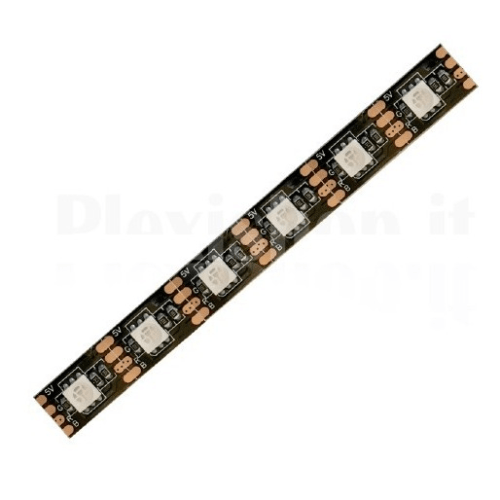
Yes — LED strip lights can be cut to any length at the designated cut marks, which appear every 25mm to 100mm depending on the strip type and 1m on 220v strips. These are clearly indicated by a scissors icon and copper solder pads on the strip. Simply use a sharp pair of scissors or a Stanley knife along the cut line. Important: cutting between marked points will damage the circuit and that section will not light up. If you need to reconnect cut sections, our LED strip connectors and jumper wires make it easy — no soldering required. This flexibility makes LED strips ideal for custom lengths in South African kitchens, bars, retail displays, and home theatre setups.
How do I mount LED strip lights securely?
Most LED strips come with a 3M self-adhesive backing for quick installation. For a secure, long-lasting mount:
(1)clean the surface thoroughly with isopropyl alcohol and allow it to dry completely.
(2) peel the backing and press the strip firmly into place.
(3) hold for 30–60 seconds along the full length. For heavy-duty or outdoor applications, we recommend using LED aluminium channel profiles, which protect the strip, improve heat dissipation, and give a professional finish. In humid South African environments (coastal areas, bathrooms), mounting in an aluminium channel also prevents moisture from lifting the adhesive.
Avoid mounting on dusty, oily or textured surfaces without additional clips or channels.
Aluminium channels = professional finish + longer lifespan
Do I need a transformer (Driver) for LED strip lights?
Yes — in almost all cases, you need an LED driver (transformer) to power your strip lights safely. South African mains power runs at 220V–240V AC, while most LED strips operate at 12V or 24V DC. Connecting a strip directly to mains without a driver will instantly destroy it and creates a serious electrical hazard. The only exception is 220V LED strip lights, which are designed to plug directly into a standard South African wall socket via an inline driver. When choosing a driver, match it to your strip's voltage (12V or 24V) and ensure the wattage rating is at least 20% higher than your total strip wattage to prevent overheating and premature failure.
Always upsize your driver by 20% for safety
What is the difference between 12V, 24V and 220V LED strips?
12V LED strips are the most common and widely available in South Africa. They're ideal for short runs (up to 5 metres) in homes, cars, caravans and under-cabinet lighting. They pair well with 12V battery and solar setups.
24V LED strips run cooler, produce less voltage drop over longer distances and are better suited for commercial installations and runs over 5 metres. They offer brighter output and more consistent colour along the full length.
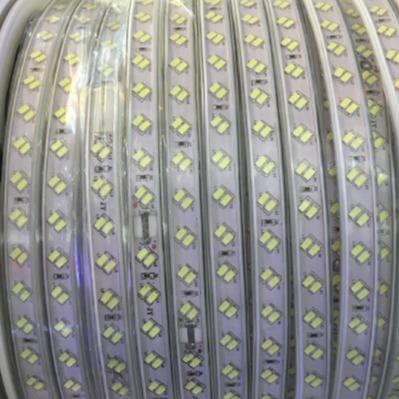
220V LED strips connect directly to South African mains power with no external driver needed. They're ideal for long continuous runs (up to 50 metres from a single point), outdoor signage and garden lighting. They are not cuttable as frequently or usually have 1m cut marks and require caution when handling due to mains voltage.
Use 24V for runs over 5m to avoid colour fade at the end
Are LED strip lights waterproof?
LED strips come in different IP (Ingress Protection) ratings to suit different environments:
IP20— No water protection. For indoor dry use only (ceilings, under cabinets, living rooms).
IP65— Silicone coating over the LEDs. Splash-proof and suitable for South African bathrooms, outdoor covered patios and braai areas.
IP67— Fully sealed in a silicone tube. Can be submerged briefly. Ideal for pool areas, outdoor gardens and feature walls exposed to rain.
IP68— Fully waterproof for continuous submersion. Used in pond lighting and underwater features.
For most South African outdoor installations, IP65 or IP67 is the recommended choice. Always check the IP rating before purchase to avoid damage from moisture.
IP67 for patios, IP68 for pools and outdoor exposed areas
What power supply (driver) do I need?
Choosing the right driver is simple with this formula: Total Watts = Watts per metre × Strip length in metres. Then add 20% safety margin. For example, a 5-metre strip at 14.4W/m needs a minimum 86W driver(5 × 14.4 × 1.2 = 86.4W).
Match the driver voltage exactly to your strip —12V strips need a 12V driver, 24V strips need a 24V driver.
For dimmable setups, ensure you choose a dimmable driver and pair it with a compatible LED dimmer switch. Waterproof (IP67) drivers are available for outdoor and bathroom installations.
Multiply watts/m × length × 1.2 to find your minimum driver size